
COVID’s mental health fallout will last a long time
Although Australia is now largely COVID-free, the repercussions of the pandemic are ongoing.
As the pandemic enters its second year, many people will be continuing to suffer with poor mental health, or facing new mental health challenges.
The effects of recurrent lockdowns, fears about the effectiveness of the vaccines, restricted movement within and beyond Australia, and the bleak economic outlook are taking their toll on psychological well-being.
Now is the time to think about sustainable, evidence-based mental health programs that will serve Australians as we confront the mental fallout of the pandemic in 2021 and beyond.
Get your coronavirus updates from health experts.
The evidence is in
We now have incontrovertible evidence mental health has deteriorated during the pandemic. Large studies that assessed people’s mental health before and during COVID-19 have reported marked increases in anxiety, depression and post-traumatic stress since the pandemic began.
Although many experts predicted people with pre-existing mental disorders would be most vulnerable, we’ve seen even greater increases in psychological distress among those without a history of mental illness.
Unemployment and financial stress have exacerbated psychological problems during the pandemic. The major concern is that the increase in mental health problems will persist for years because of the economic downturn facing most nations.
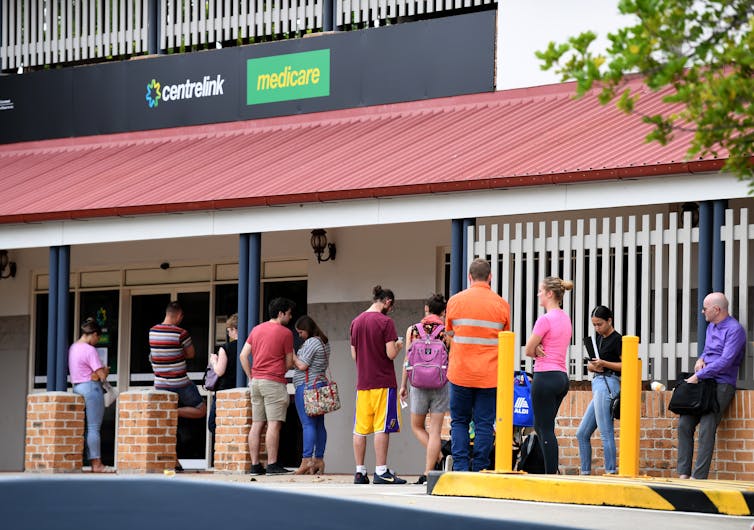
Importantly, suicide rates increase during economic downturns. One study showed each 1% increase in unemployment was associated with a 1% increase in suicides.
The impact of unemployment and financial hardship on mental health is relevant for many Australians, as fears of reduced support from the JobSeeker and JobKeeper schemes loom. Although the government this week announced the JobSeeker payment will go up, welfare groups have warned it’s still not enough.
So what can we do?
The question now facing many nations is how to manage the unprecedented number of people who may need mental health assistance. There are several challenges.
First, lockdowns, social isolation, and fear of infection impede the traditional form of receiving mental health care in clinics. These obstacles might now be greater in other countries with higher infection rates, but we’ve certainly seen these challenges in Australia over the past year.
Second, many people who have developed mental health conditions during the pandemic would never have had reason to seek help before, which can impede their motivation and ability to access care.
Third, many people experiencing distress will not have a clinical mental disorder, and in this sense, don’t require therapy. Instead, they need new skills to help them cope.
Read more: Stressed out, dropping out: COVID has taken its toll on uni students
Since the pandemic began, there’s been widespread promotion of smartphone mental health apps as a remedy for our growing mental health problems.
While these programs often work well in controlled trials, in reality most people don’t download health apps, and even fewer continue using them. Further, most people who do use health apps are richer, younger, and often in very good health.
Evidence does suggest apps can play a role in delivering mental health programs, but they don’t represent the panacea to the current mental health crisis. We need to develop more effective programs that can be scaled up and delivered in an affordable manner.
One approach
A few years ago, the World Health Organization and the University of New South Wales (UNSW) jointly developed a mental health treatment program.
The program consisted of face-to-face group sessions teaching people affected by adversity new skills to manage stress more effectively. It has been shown to reduce anxiety and mood problems in multiple trials.

My team at UNSW has adapted this program during COVID-19 to specifically address the mental health needs of people affected by the pandemic. A clinical psychologist leads weekly sessions via video-conferencing over six weeks, with four participants in each group. The sessions cover skills to manage low mood, stress and worries resulting from the pandemic.
Typically, mental health programs have attempted to reduce negative mood and stress by using strategies that target problem areas. A newer approach, which we use in this program, focuses on boosting positive mood, and giving people strategies to optimally experience positive events and pleasure when faced with difficulties.
In controlled trials this strategy has effectively improved mental health outcomes, even more than a traditional program.
Trialling this tailored program around Australia in recent months, we’ve found it effectively improves mood and reduces stress. Although we haven’t yet published our results in a peer-reviewed journal, our preliminary data suggest the program results in a 20% greater reduction in depression than a control treatment (where we give participants resources with strategies to manage stress and mood).
This raises the possibility agencies could provide simple but effective programs like these to people anywhere in Australia. Delivering a program by video-conferencing means it can reach people in remote areas, and those not wishing to attend clinics.
Read more: Is your mental health deteriorating during the coronavirus pandemic? Here's what to look out for
One of the common patterns we’ve seen in previous disasters and pandemics is that once the immediate threat has passed, governments and agencies often neglect the longer-term mental health toll.
Now is the time to plan for the delivery of sustainable, evidence-based mental health programs.
Australians experiencing distress related to the pandemic can express interest in participating in the trial program here.
If this article has raised issues for you, or if you’re concerned about someone you know, call Lifeline on 13 11 14.
This article first appeared in The Conversation and is published on Men.com.au with permission