
Pergola or Patio? A Homeowner's Guide for Australia
Planning an outdoor living area often starts with a simple idea. You picture a comfortable space where you can enjoy your morning coffee, host Australian barbecue gatherings or unwind at the end of the day. Then you start researching, and suddenly you are faced with a question that seems much harder than expected.
Should you be looking for a patio or a pergola?
The answer is not always straightforward. Across Australia, these terms are used differently depending on who you ask. A homeowner may call it a pergola, a builder may describe it as a patio, while your local council may classify it another way altogether.
In this post, we will look at why the terminology varies, what patios and pergolas have traditionally meant, how different planning authorities approach them, and why describing the structure accurately can make your project run much more smoothly.
What Did These Structures Traditionally Mean?
Although modern designs have blurred the distinction, patios and pergolas originally served different purposes.
A Traditional Pergola
A pergola has long been recognised as an open outdoor framework supported by columns or posts.
Traditionally, it would include:
- An open roof frame
- Water-permeable or minimal overhead covering
- Space for climbing vines or other plants
- Partial shade instead of complete shelter
- A decorative feature within a garden or entertaining space
For homeowners with pools, and Roy Morgan data shows that over 3.1 million Australians live in a house with a swimming pool or spa, an open pergola can work particularly well when paired with appropriate pool fencing, privacy screens, or other perimeter solutions. Further, awnings are ideal for pools as a complementary addition that provides shade without fully enclosing the space.
A Traditional Patio
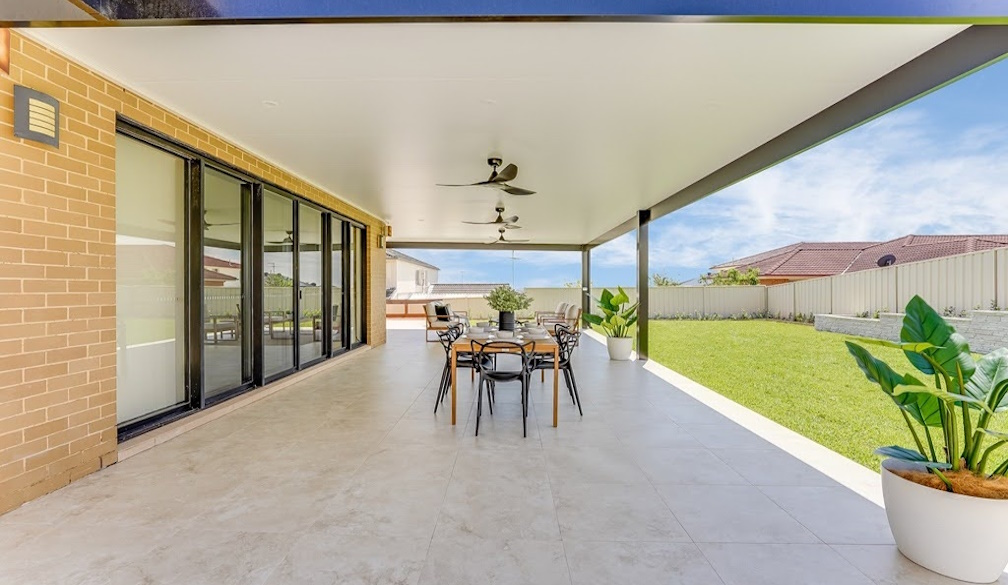
A patio has generally referred to a covered outdoor area intended for everyday living.
It commonly includes:
- A permanent roof
- Protection from rain and harsh sunlight
- A paved, decked or concreted floor
- A position attached to or close to the house
- Space for outdoor dining and entertaining
While there are many design variations today, this remains the traditional understanding of a patio.
For Sydney homeowners specifically, structures like awnings in Sydney installations often complement both patios and pergolas, adding an additional layer of sun and rain protection along the open sides of an outdoor area.
Primary Differences Between Both
|
Feature |
Pergola |
Patio |
|
Roof |
Open or water-permeable |
Permanent waterproof roof |
|
Weather protection |
Limited |
High |
|
Traditional purpose |
Garden shade |
Outdoor living |
|
Plant support |
Common |
Uncommon |
|
Rain protection |
Generally no |
Generally yes |
Why Modern Outdoor Designs Blur the Line
If patios and pergolas once had fairly distinct meanings, why has the difference become so confusing? The answer lies in how outdoor living has evolved.
Today's homeowners often want spaces that are comfortable throughout the year. The Australian barbecue culture has played a significant role in that shift; outdoor entertaining has become central to how Australian families socialise.
Moreover, according to Cancer Council Australia, Australia has one of the highest rates of skin cancer in the world, which has also driven growing demand for properly shaded outdoor structures that allow families to spend time outside more safely.
As a result, outdoor structures have become far more sophisticated than they were a generation ago. Many now include adjustable louvred roofing, retractable roof systems, ceiling fans, beautiful integrated lighting, heating systems and even insulated roofing panels. Some structures combine several of these features while still being marketed as pergolas. Others are advertised as patios even though parts of the roof remain open.
How the Terminology Changes Around Australia
One thing that catches many homeowners by surprise is that there isn't one definition used across the country.
Western Australia
Western Australia makes one of the clearest distinctions between the two. Many councils describe a patio as a roofed outdoor structure that keeps out the weather, while a pergola is generally expected to have an open frame with a permeable covering or certain operable louvred roofs.
If you're building in WA, understanding this difference can make the approval process much easier.
Victoria
In Victoria, a pergola is commonly treated as an open structure that allows light or water to pass through the roof covering. If the roof is fully waterproof, it may instead be assessed as a verandah or another type of roofed addition.
Queensland
Gold Coast guidance generally distinguishes between roofed patios and open pergolas. Redland City Council, however, refers to some roofed structures as a "pergola or patio". It's a good example of why the same type of structure can be described differently depending on where you live.
New South Wales
If you look at the NSW Planning Portal, you'll find patios and pergolas listed alongside decks, balconies and other outdoor structures.
For homeowners, that means the design and specifications of the project are usually more important than the label attached to it when checking approval requirements.
Important Things To Know Before Requesting Quotes to Transform Your Outdoors
Many homeowners focus on the name before considering the design itself.
A better approach is to ask yourself a few practical questions first.
|
Question |
Why It Matters |
|
Do I want protection from rain? |
Determines roofing type |
|
Should the area stay cool during summer? |
Influences roof materials |
|
Will water need to drain into gutters? |
Affects engineering and design |
|
Could council approval be required? |
Depends on local regulations |
|
Will the structure connect to my home? |
May affect planning requirements |
For homeowners with outdoor pools, the question of side coverage is also worth thinking through early.
Awnings are ideal for pool areas where you want shade and wind protection without the visual weight of a full enclosure, and they can be integrated alongside either a patio or pergola structure depending on the layout of your property.
For Sydney residents in particular, awnings specialists near Sydney can also advise on how side coverage works alongside your main outdoor structure to maximise comfort and usability.
What Will You Build?
Whether you call it a patio, pergola, awning or outdoor room, the most important thing is to describe the structure clearly. Once you know the roof type, level of weather protection, layout and approval requirements, it becomes much easier to compare quotes and choose a design that suits your home.
FAQs
Do I need to decide whether it's a patio or a pergola before asking for a quote?
No. The easiest way to avoid confusion is to explain what you want built. Tell your builder about the roof, the materials, whether it will attach to the house, and how you expect to use the space.
Could calling it a patio instead of a pergola affect approval?
Sometimes, yes. Different councils don't always use the same terminology, so it's worth checking how your local authority classifies the structure before work begins.
Why do builders ask so many questions at the quoting stage?
Those questions help them understand exactly what you're planning. Features like roofing, drainage, size and location all influence the design, materials and overall cost. They also help avoid misunderstandings later. For example, one homeowner may ask for a pergola and picture an open shade structure, while another may expect a roofed area that keeps out rain. The more detail you provide at the quoting stage, the easier it is for the builder to recommend the right structure and prepare a fair quote for the finished result you actually want.