
Designing Campaign Microsites with Reusable Content Blocks: A Scalable Framework for High-Impact Marketing
Campaign microsites are a powerful marketing vehicle. They enable brands to carve out a more focused, intimate space for everything from a product launch or seasonal promotion to a specific brand storytelling effort or time-sensitive event. Compared to regular web pages, microsites also tend to favor creativity, story progression and conversion rates over traditional content. Yet building them over and over again from the ground up becomes costly and operationally excessive.
The more campaigns are run, the clearer it is that they need to be scalable. Every time a layout is rebuilt, an effective content structure rewritten or every component manually copied over for a new initiative, bottlenecks emerge and technical debt accumulates. Instead, campaigns microsites should be generated with reusable content blocks. For example, structured, modular architecture often made with headless CMS systems allows organizations to benefit from a sustainable solution while maintaining creative flexibility. This article will discuss how reusable content blocks create campaign microsites that are scalable, ready in no time and financially feasible.
Reducing the Need for One-Off Page Creation
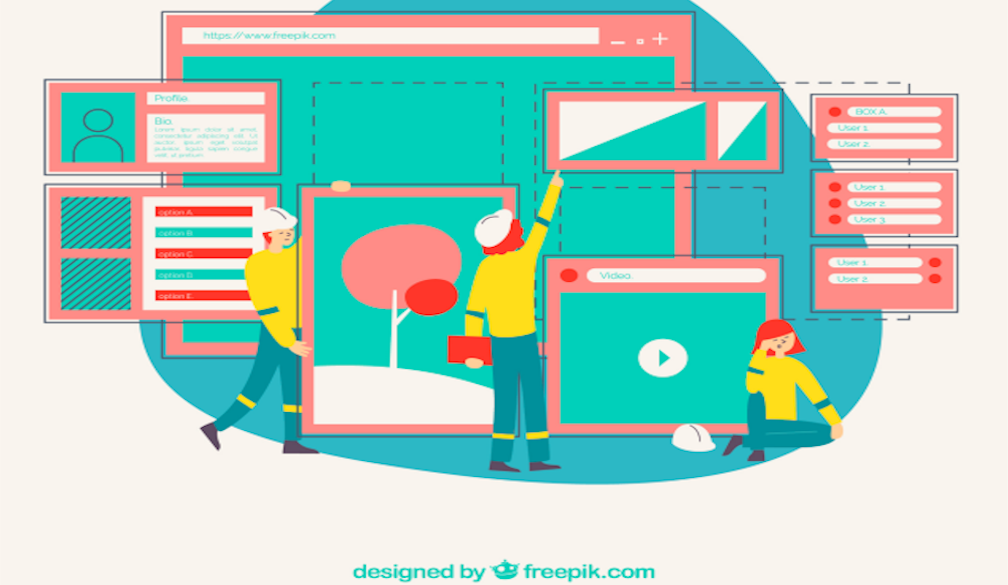
In many organizations, a microsite is a one-off page. The design team will create a layout just for this particular microsite, the development team will build a template just for this one initiative, and the content team will pull together messaging crafted just for this one effort. Storyblok headless CMS platform enables teams to move beyond this one-off mindset by supporting modular, reusable content structures. While everyone appreciates the creative freedom of these efforts, they're not always the easiest to scale. With reusable content blocks, this mentality changes. Rather than creating a new microsite from scratch, teams identify component pieces that can act as hero sections, product opportunity grids, testimonial segments, countdown clocks, and CTA modules. These components create a reusable library that can be assembled as needed.
This process reduces the need to create from scratch. The focus can be on strategy and storytelling instead of bringing in all the pieces from a previous effort. The more this is done over time, the more repeatable it becomes as a process.
Creating Structurally Sound Components with Room for Creative Freedom
Reusable content blocks must allow for flexible creativity but also structure. Each block should have predetermined fields for the title, body copy and image and associated metadata so that the fields are filled in but the brand guidelines remain intact.
Structure allows for adaptability. A hero section could have three different images and corresponding text but maintain the same layout and accessibility requirements. A promotional block could be used for Mother's Day and Father's Day but maintain its consistent structure without any issues.
This notion makes it easier for content teams to pivot, as they won't need to worry about breaking a layout, but also ensures that as scaling is required, those content blocks can remain consistent across microsites but allow for creative freedom.
Improving Time-to-Market for Campaign Launches
Microsites are often time-sensitive based on campaigns. The longer an organization takes to get a microsite up and running, the less successful it may be especially if it coincides with competitive promotional efforts.
There's always danger in manually rebuilding pages since things could be missed in the process and it always slows down time to market.
With reusable content blocks, time to market dramatically decreases. As long as a structured library exists, it's a matter of putting together the puzzle pieces from what already exists to create a unique solution. Development cycles are lessened because all of the pieces needed are already vetted.
This speed keeps a competitive edge. Marketing teams are able to launch their initiatives quicker, respond to trends rapidly and act upon time-sensitive opportunities. Increased operational speed provides a competitive advantage that reusable content blocks support through modular architecture.
Increasing Creative Liberty by Providing Structure
One objection to reusable blocks is a potential curtailment of creativity. Yet systems with defined modules do not reduce creative agency merely streamline it.
Design systems with reusable blocks create visual synergy, yet allow seasonal images, typeface changes, and colors relevant to a campaign to be layered on top of pre-determined blocks without redesigning an entire layout.
Such access to ease prevents creativity from being stifled within such boundaries. Those who might work on the microsite can instead focus on the narrative and visual elements instead of the tedious structural component which would be the case if a previously designed system was not available. Microsites can still feel custom while gaining operational efficiencies.
Simplifying Omnichannel Use of Microsite Content
More often than not, campaign microsites do not stand alone. The same information from a microsite could be applied to email campaigns, mobile apps, and social media blasts, for example. When content from a microsite is unstructured, reusing assets is more complicated.
Reusable content blocks facilitate omnichannel use. Since components are structured and pulled from a central hub, they can be accessed and used in other places, too. The same testimonial block on one microsite can serve as the header of an email or an in-app message on mobile without copy-pasting.
This component ease reinforces campaign cohesion. Keeping the same blocks in use across diverse channels maintains messaging consistency, enhancing brand recognition and engagement.
Facilitating Real-Time Changes during Active Campaigns
Campaigns are always live. Deals fluctuate, stock changes, and feedback can redirect messaging during the active life of a microsite effort. Yet often, static sites seem to fail in this regard.
With structured blocks that content editors can access, changes can be made at the component level on the fly. These edits are made within a centralized system, and live updates distribute the new changes immediately across the microsite. Thus, real-time operating efforts can enhance campaign success.
Campaigns are most effective when they can be responsive. There's no reason to wait until the next round of efforts to adjust a microsite's offering/message if it can change while it's live.
Technical Debt Reduction and Post-Campaign Clean Up
When campaigns end, there often follows a technical debt clean up phase of things like pages that were duplicated on the microsite, decommissioned premiums not yet removed, and templates created but never used.
Reusable content blocks can help simplify. If the modules are campaign specific, they can be turned off for the project and archived without having to restructure pages. The necessary page components remain intact and reusable for the next go-around.
This discipline maintains system integrity. There's no backlog of artifacts and files that the organization has to sift through since a well-functioning content library is built over time without redundancy.
Data to Refine Reusable Components Over Time
One of the greatest benefits of microsite modular design comes from the ability to enhance components over time through learnings of performance. Because blocks are reused across campaigns, performance data exists at the component level.
You learn what hero design is most engaging, what testimonial approach converts, and what call to action is most effective. Instead of iterating an entire page based on feedback, teams focus on a single block.
This compounding improvement increases the value of each campaign block by block. The next time elements are employed, they're even better and use real-world data that helps them become increasingly more valuable with each return. Data-driven enhancement becomes a staple of the microsite process.
Scaling for Regional and Global Campaigns
When campaigns are executed internationally, separate localized microsites are generally employed. However, without structured foundational pieces, duplicating entire microsites for each region can become complicated.
Reusable content blocks encourage the ease of scalability for localization efforts. The same basic elements can be kept, yet messaging through localized fields aligns with the regional market. Conditional logic can determine if components will read one way or the other based on where users are accessing the page.
This scalability means global campaigns can be easily launched without deconstructing the integrity of what's working for the bulk of users. A structured approach gives more flexibility where needed.
Component Library Across Marketing and Product Teams
Reusable content blocks are made even stronger when they're not used only by one campaign team. By creating a shared component library, marketing, product and design teams can leverage the same established framework from the start.
Instead of one department creating a component and another creating a similar yet different component, a centralized approach avoids duplication and builds collaboration faster.
Where product teams can add a feature module, marketing can refine a value proposition, and design can make aesthetic recommendations, all within the same space, the library becomes a strategic asset over time that benefits campaign microsites and other digital endeavors.
When everyone works from the same component structure, brand integrity is stronger and operational silos are reduced. The microsite creation becomes a collaborative effort based on shared resources instead of an isolated build.
Facilitating Progressive Enhancement without Rebuilding Structures
Campaign microsites are seldom set-and-forget digital products. During their lifecycle, interactive features, multimedia content, or new engagement opportunities may be added long after initial deployment. In a more rigid system, such enhancements could require a complete overhaul.
Microsites utilizing modular content blocks support this progressive enhancement. Since components are independent of one another, new features can be stacked on top of the existing structure without needing to take the entire microsite down. For example, interactive elements like animations or dynamic fields in forms can exist comfortably within defined modules.
It's this confidence in enhancement that maintains the integrity of the original architecture. If campaign teams want to expand their vision, they can slowly but surely enhance user experience without breaking the structure down. Progressive enhancement makes microsites function even better over time without sacrificing the established baseline.
Compounding Accessibility and Compliance with Modular Blocks
Accessibility and compliance criteria are important considerations for any campaign rollout. However, if microsites are created from scratch each time, teams may be vulnerable to consistent error. What is deemed accessible in one project might not translate over to another, leading to accessibility gaps and compliance inconsistencies.
Reusable content blocks solve this problem by deploying elements with accessibility best practices and compliance considerations pre-packaged into the library of components. Each module comes with specific parameters that include formatting, contrast, metadata, and disclosures for compliance.
This means that standardization facilitates built-in compliance for every microsite going forward. There's no need to focus on structural needs once they've already been established. Instead, creativity and messaging take precedence. Over time, this decreases risk and increases accessible and compliant experiences during campaigns.
Establishing Consistency for High-Volume Campaign Creation
Should a brand run many campaigns within months or years of each other, the ability to produce microsites at scale becomes critical. Without a structured approach to reuse, high-volume creation can burden teams and exacerbate technical limitations.
A system of modular content blocks creates a consistent approach to sustainable creation. New campaigns access existing blocks instead of needing new templates. Updates are implemented and tested sooner since these modules have been validated in the past.
This repeatable model allows for growth without additional complexity. Marketing teams are able to sustain high-quality output with quick turnaround times despite amplified campaign volume. By establishing a microsite with reusing blocks, a scalable engine is created for digital outreach, not a one-off in a series of hopeful projects.
Allowing for Quick Repurposing Post Campaign of Microsite Content
Microsites often house storytelling, product knowledge, testimonials, and creative assets, which are only relevant for one campaign. When the campaign ends, the microsite is often archived and much of this great content is reduced to a static, unknown existence. Why? Because it's been built into a rigid structure without any intention of reusing it for anything else.
With reusable content blocks, that all changes. Since the content is modular and formatted, it's easier to pull individual parts and use them in other digital endeavors. For example, a great hero story can now become a featured portion of a homepage or even a testimonial block placed on product detail pages or in email outreach. There's no need to pull an entire section and cut/paste/reform it into something else; teams can reuse what they already have.
Furthermore, this allows for an accelerated ROI on content. Campaigns have an initial expense which can now stretch for months or years beyond a microsite being taken down. Instead, over time, it becomes a living organism instead of another expense that merely sits on a computer.
Enhancing Brand Consistency Over Time Between Campaigns
As more campaigns launch over time, months, years, seasons, brand consistency can become increasingly complex. Each microsite may look and feel differently; some may push different messages or have a different creative angle to attract audiences more sporadically. This is not cohesive.
However, with reusable content blocks, there's a connection to creative innovation which exists within a consistent framework. The standardized value proposition messaging, treatment, and layout are consistent. The only things that change are seasonal themes and innovative steps meaning, creativity might not always be at risk with uniqueness over time.
In time and across campaigns, this builds better brand equity. Audiences will gain familiarity with the structural components and receive cues to trust the presented information or push messages. They feel inclined to stay engaged as the parts they've come to recognize stay the same within new iterations looking to engage them. Thus, organizational looks stay the same, but the sensibility is new.