
How to Pick the Best Marquee Size for Your Occasion
A marquee event is typically a large-scale, high-visibility occasion designed to attract attention and accommodate a broad audience. These events often draw significant interest and require careful coordination to ensure everything runs smoothly.
Planning a marquee event can feel complex, and one of the most important early decisions is choosing the right marquee size. This choice influences everything from venue layout and logistics to catering, crowd flow, and even the overall atmosphere.
If the space is too small, guests may feel crowded and uncomfortable. If it is too large, the event can feel empty and costs may increase unnecessarily. Getting the size right helps create the ideal balance, ensuring a seamless flow and an inviting atmosphere.
If you are unsure where to begin, you are not alone. With decades of experience as Melbourne marquee hire specialists, we have supported a wide range of large-scale events. Our experience allows us to guide you through the process with confidence and clarity.
This guide outlines key considerations to help you choose the right marquee size and plan a successful, stress-free event.
Start with Your Guest Numbers
Your guest list is the foundation of your planning. The number of attendees will directly determine how much space you need, and the amount of space per person will vary depending on the style of event.
For example, standing cocktail-style events typically require around 0.8 square metres per guest, allowing enough room to move and socialise comfortably.
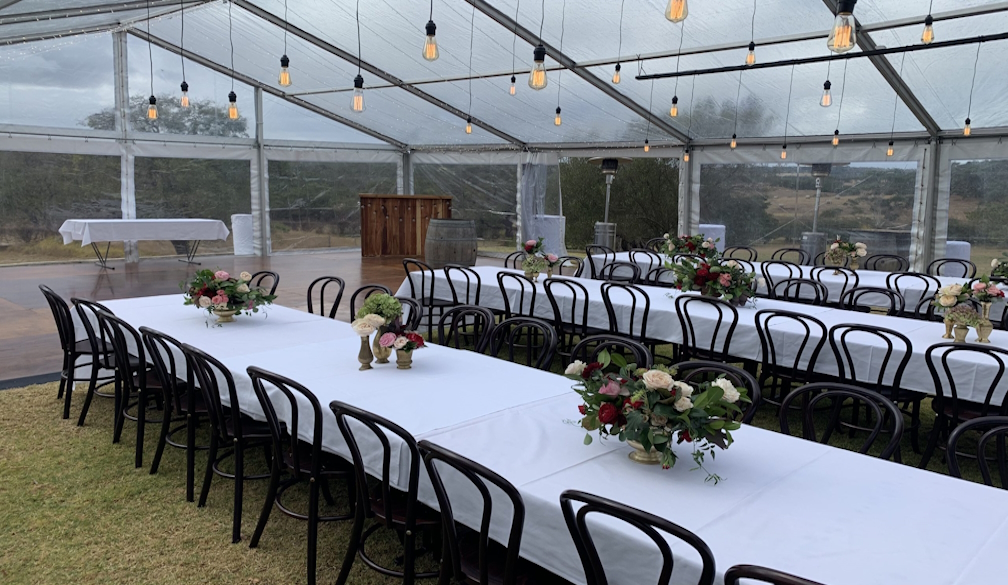
For seated dining at long tables, approximately 1.5 square metres per person is recommended to allow space for chairs and movement.
Round table layouts generally require slightly more space, around 1.6 square metres per guest, to accommodate seating and circulation comfortably.
Consider Layout and Overall Experience
The type of event you are hosting will influence how the space should be arranged. Thinking about how guests will move through the space and interact with each area will help you determine the most suitable layout.
Weddings: Creating a Seamless Flow
These typically include:
- Dining area: The main focal point of the event, whether using long or round tables. Proper spacing ensures comfort and ease of movement.
- Reception area: A welcoming space where guests can gather, socialise, and enjoy canapés before the main event.
- Dance floor: A key feature for most weddings. Ensure there is enough room for guests to enjoy the space comfortably.
- Bar or beverage station: This area should allow room for both guests and staff to move freely. Avoid placing furniture too close to prevent congestion.
- Stage: If live entertainment is involved, allocate sufficient space for performers and equipment.
Parties and Social Events: Flexible and Relaxed
Parties and casual gatherings typically allow for more flexible layouts. A standing event will require less space than one with full seating arrangements.
Even with a relaxed setup, you will still need to account for areas such as a dance floor, bar, food stations, and lounge spaces where guests can gather and unwind.
Corporate Events: Tailored to Purpose
Corporate functions vary widely, so the layout should be designed around the event’s objectives.
- Conferences: Often benefit from theatre-style seating along with breakout spaces for workshops or discussions.
- Exhibitions: Require open layouts to accommodate display booths and steady foot traffic.
- Product launches: Need clearly defined areas for product displays, presentations, and guest interaction.
- Formal dinners: Follow a similar structure to weddings, with seating, staging, and service areas carefully planned.
Allow for Essential Functional Areas
Beyond guest space, every event requires behind-the-scenes areas that support food service, entertainment, and overall operations.
Dance floors and entertainment
Dance floor size should reflect your guest numbers. As a general guide:
- Up to 80 guests: approximately 4m x 4m
- Up to 150 guests: approximately 6m x 6m
- Larger events: around 7m x 7m
Live bands typically require more space than DJs. A five-piece band, for example, may need a stage area of around 6m x 4m.
Catering space
Caterers need a designated area for food preparation and service. This is often positioned adjacent to the main marquee and designed to remain discreet while still functional.
A well-coordinated setup between the organiser and catering team ensures smooth service throughout the event.
Bar area
The bar is often a central gathering point. It needs to accommodate guests, staff, equipment, and storage for drinks and glassware.
For larger events, multiple bar stations may be required to prevent queues and maintain a smooth flow.
Additional spaces may also be required depending on the event, such as reception areas, lounges, photo booths, dessert stations, or amenities. Planning these in advance helps create a more organised and enjoyable experience.
Bringing It All Together
Selecting the right marquee size can feel like a complex decision, but by focusing on your guest numbers, layout, event type, and functional requirements, you can create a space that works seamlessly.
Working with an experienced event hire provider can make this process far more straightforward. With the right guidance, you can achieve a well-balanced setup that enhances both comfort and atmosphere.
Start Planning with Confidence
Choosing the right marquee is a key step in delivering a successful event. With careful planning and the right support, you can create a space that feels welcoming, functional, and memorable.
If you’re looking to host an event and need to hire a marquee, get in touch with a credible Melbourne event hire company to arrange a consultation, request a personalised quote, or organise a site inspection. We are here to help you create an event that runs smoothly and leaves a lasting impression.