
A Parent's Guide to Buying an Electric Scooter for Kids in Australia
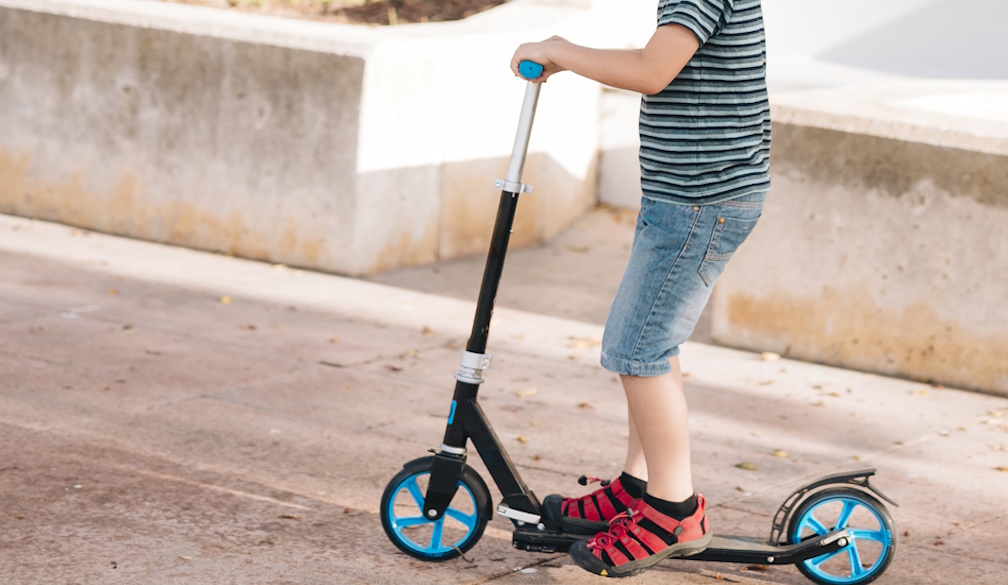
Every parent who has typed "electric scooter kids" into Google at ten o'clock at night, phone glowing under the doona while the birthday countdown ticks down, knows how quickly the search turns into a headache. One listing promises speeds of 25 km/h, the next is capped at a crawl, and somewhere in the mix is a news story about a state government tightening the rules on who can actually ride one. Add in the fact that a cheap import from an online marketplace might not even meet basic safety standards, and it's no wonder the whole exercise feels more complicated than it should.
The good news is that once you separate genuine kids' scooters from the bigger, faster personal mobility devices adults use for commuting, the decision gets a lot simpler.
A proper electric scooter for kids is built around a completely different set of priorities like low top speeds, sturdy construction, and safety features that account for the fact that a seven-year-old's reaction time isn't the same as a teenager's. Understanding that distinction is the first step to buying something your child will actually get years of use out of, rather than something that ends up in the garage after one nervous ride around the block.
Why "Kids' Scooter" and "E-Scooter" Aren't the Same Thing
This is where a lot of confusion starts. The e-scooter road rules making headlines across Queensland, Victoria and Western Australia, generally requiring riders to be sixteen or older on public roads, footpaths and shared paths, are aimed at the higher-powered personal mobility devices used by teenagers and adults for getting around. Those rules don't automatically apply to a genuine kids' model designed for the driveway, the local park or a quiet cul-de-sac under parental supervision.
A proper electric scooter for kids typically runs a motor well under 150 watts, often closer to 100, and is sold under toy safety standards rather than transport regulations. Its top speed is usually locked somewhere between 8 and 16 km/h depending on the age bracket it's designed for, nowhere near the 25 km/h ceiling that applies to adult-oriented models. That said, rules are genuinely shifting state by state, NSW has been reviewing a minimum age for e-scooters, and Queensland has already tightened its supervision requirements for younger teens on the more powerful devices, so it's worth checking your state's current guidance before assuming a scooter is fine for public footpaths just because it's marketed for children. Riding on private property, a backyard, a driveway, a farm, generally sits outside these road rules altogether, which is where most younger kids will be using their scooter anyway.
Features That Actually Matter for Safety
Once you're looking at genuine kids' models, the features worth comparing are fairly consistent across brands. Adjustable or lockable top speed is arguably the most important, since it lets a scooter grow with your child rather than being replaced every twelve months. A scooter that starts at a gentle 8 km/h for a first time rider and can be wound up to 16 km/h once they've built confidence offers a lot more longevity than a single fixed speed model.
Braking deserves just as much attention as it does on adult bikes. Look for a dual braking system, ideally combining a hand operated brake with a rear foot brake, since relying on a single mechanism is asking a lot of a young rider who might panic in the moment. Tyre type matters too. Pneumatic or foam filled tyres handle cracks in the footpath and driveway gravel far better than hard plastic wheels, which tend to transmit every bump straight through the deck.
Weight capacity and deck size should match your child's age and build rather than just their birthday, since a scooter rated for a six year old will feel cramped and unstable under a solidly built ten year old. Battery range probably won't matter much if most rides are happening around the driveway or local park. Charging time might, especially when someone remembers at 4 pm that they wanted to ride it at 4:30. Finally, check for genuine AS/NZS toy safety compliance markings rather than taking a listing's word for it, since this is one area where cheap imports sold through online marketplaces sometimes cut corners.
Standout Brands Worth Considering
Segway Ninebot has built a solid reputation in this space, with the Zing C20 and C2 series offering adjustable speed settings, dual brakes and a sturdy build that holds up to daily backyard use. It's a name parents tend to trust because the same brand backs plenty of the adult PMDs seen on Australian streets, which usually means a decent warranty and parts availability if something needs replacing.
Globber, the brand behind plenty of the scooters you'll see at Australian primary schools, offers its E-motion range across several age tiers, from the E-motion 6 for younger riders through to the E-motion 27 for older kids wanting more speed. The lower speed cap and lightweight frame on the entry models make them a sensible starting point for a first electric scooter.
Razor remains one of the most recognisable names in the category, and models like the Power Core E90 and E100 continue to turn up as reliable, budget-friendly options that Australian retailers including Kmart, Target, BIG W and specialist stores like iScoot, scooterhut.com.au keep well stocked. Razor has also been around long enough that finding parts or someone who knows the scooters isn't usually difficult. That's useful when you're buying for a child who may be obsessed with it for three years, or completely over it by next summer.
Frequently Asked Questions
What age is appropriate for an electric scooter for kids?
Most reputable brands design their entry-level models for children around six to eight years old, with speeds capped closer to 8 km/h, while models aimed at ten and up typically allow speeds up to 16 km/h. Match the scooter to your child's balance and confidence on a regular kick scooter first, since electric assistance adds speed to a skill set that still needs to be solid.
Do kids need a helmet to ride an electric scooter in Australia?
Yes, and it shouldn't be treated as optional even in the backyard. Most states require helmets for e-scooter riders regardless of age, and given how much faster an electric scooter travels compared to a manual one, a properly fitted bike or scooter helmet is non-negotiable from the very first ride.
Can my child ride a kids' electric scooter on the footpath?
This depends on your state and the power of the specific scooter, so it's worth checking current road rules rather than assuming. Genuine low-powered toy-class scooters are generally treated differently to the higher-powered personal mobility devices that now carry minimum age requirements in states like Queensland, Victoria and Western Australia, but supervised use on quiet footpaths or shared paths still calls for common sense and local awareness.