
How to Choose the Right Plant Trailer
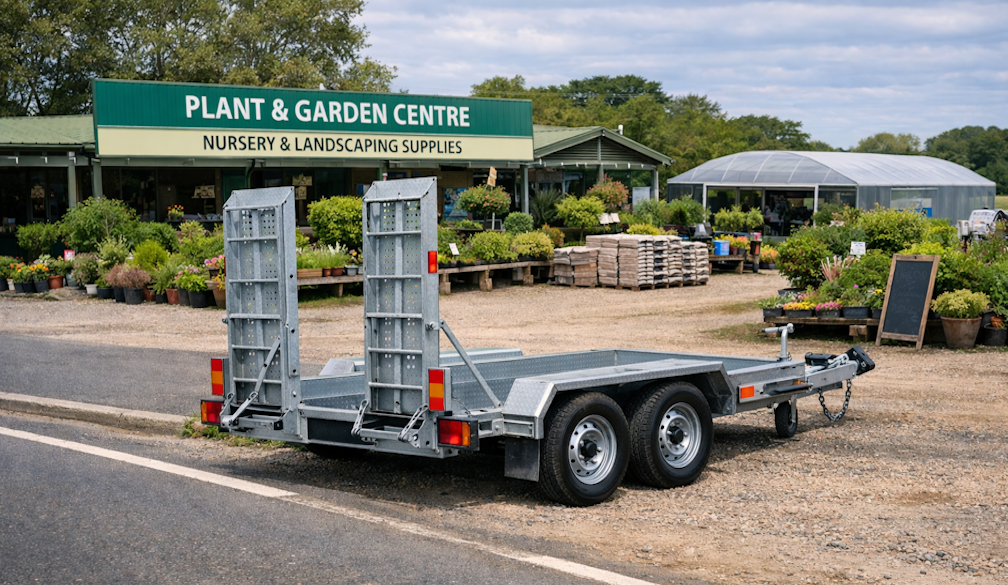
For any Australian tradie, contractor, owner-operator or plant hire business, the trailer sitting behind your ute is one of the hardest-working pieces of equipment you own. It might not be as exciting as buying a new excavator or upgrading your fleet, but choosing the right plant trailer can have a huge impact on productivity, safety and profitability.
A quality trailer should quietly do its job every day for many years. It should safely transport your machinery, comply with Australian regulations, minimise downtime and help your business operate efficiently. On the other hand, buying the wrong trailer can quickly become an expensive mistake. An undersized trailer may limit the machines you can transport, while an overloaded trailer could result in hefty fines, insurance complications or dangerous towing conditions.
As your business grows from operating a single machine to managing multiple pieces of equipment, your trailer becomes a strategic investment rather than an afterthought, and that’s why the team at SureWeld is here to help with what actually matters when you’re matching a trailer to the way you work.
Start With the Machine, Not the Trailer
The single most common mistake is buying a trailer first and hoping the machinery fits later. Work backwards instead. List every machine you carry now — and, just as importantly, the ones you plan to buy in the next two or three years. A 1.7-tonne mini excavator, a skid-steer, a compact roller and a couple of augers all pull very different numbers.
For each machine, you need three figures: its operating weight, its width across the tracks or tyres, and its transport height. Those numbers decide the deck length, the deck width and the payload rating you actually require — not the one that sounds impressive in a brochure.
Understand Payload vs Tare Weight
Many buyers confuse trailer weight ratings, but understanding them is essential for legal towing.
The three key numbers are:
- Tare Weight – the empty weight of the trailer.
- Payload – the maximum weight the trailer can legally carry.
- Aggregate Trailer Mass (ATM) – the total permitted weight of the fully loaded trailer.
Your tow vehicle also has its own limitations, including:
- Maximum towing capacity
- Gross Combination Mass (GCM)
- Tow-ball download limit
- Gross Vehicle Mass (GVM)
All these figures work together.
For example, if your ute can tow 3,500kg but your trailer weighs 900kg empty, you only have 2,600kg remaining before reaching the vehicle's towing limit.
This is why trailer tare weight matters so much.
A lighter trailer doesn't simply improve fuel economy—it allows you to carry more machinery legally.
This is one of the major advantages of aluminium plant trailers. Because aluminium construction significantly reduces trailer weight compared with traditional steel designs, more of your available towing capacity can be dedicated to the machine rather than the trailer itself.
For businesses transporting machinery every day, that additional payload capacity can make a substantial difference.
Match the Braking System to How You Tow
Braking is a compliance issue, not a preference. In broad terms, trailers over 2,000kg ATM require brakes on all wheels, and once you pass that threshold, you’re generally into electric or hydraulic braking territory. Below it, some setups let you tow without electric brakes at all — a genuine convenience if your fleet vehicles change often.
Think about who drives your trailers. If casual staff or subbies hook up and tow, a simpler, more forgiving braking setup reduces the chance of an expensive mistake. Always confirm the exact requirement against current road rules in your state, because thresholds and inspection rules vary.
Deck Length, Ramps and Loading Angle
The angle at which a machine climbs onto the deck matters more than people expect. Low-clearance machines and long-wheelbase equipment can ground out on a steep ramp, and a bellied-out excavator halfway up a ramp is both dangerous and time-consuming.
When you’re assessing a trailer, look at:
- Loading angle — gentler angles suit low-slung machines and tracked equipment.
- Ramp type — rubber-topped, track-style, or beavertail designs each suit different gear.
- Deck length — leave room to strap down safely, not just to fit the machine.
- Tie-down points — enough rated anchor points, positioned for the loads you actually carry.
Buy for the Business You’re Becoming
A trailer is a multi-year asset, so it pays to think about the business two or three years out. Buying tightly to today’s biggest machine leaves no headroom the moment you upgrade. A little spare capacity, a slightly longer deck, or a configuration that suits a second machine can save you from replacing the whole trailer far too soon.
Australian-made also matters more here than it does with disposable gear. Local manufacturing usually means parts, servicing and warranty support are reachable, and that a trailer built for Australian conditions and standards will hold resale value when you eventually cycle it out of the fleet.
Don’t Overlook Resale and Total Cost
Price shouldn't be the only factor when comparing trailers.
Instead, calculate the total ownership cost over the trailer's working life.
Consider:
- Expected lifespan
- Maintenance requirements
- Corrosion resistance
- Warranty coverage
- Fuel efficiency
- Downtime
- Repairs
- Resale value
A well-built trailer that lasts ten to fifteen years with minimal maintenance often proves considerably cheaper than replacing lower-quality trailers every few years.
The cheapest trailer is rarely the least expensive in the long run.
The Bottom Line
Choosing the right plant trailer is about far more than selecting the biggest payload or the lowest purchase price.
The ideal trailer matches your machinery, suits your towing vehicle, complies with Australian regulations and provides enough flexibility to support future business growth.
Start with the equipment you transport, understand your legal towing limits, pay attention to deck dimensions and loading systems, and don't underestimate the value of a lighter trailer with quality engineering.
Most importantly, think beyond today's workload. A well-designed plant trailer is a long-term investment that should continue delivering value as your fleet expands and your business grows.
By taking the time to choose carefully—and working with experienced Australian manufacturers like SureWeld—you'll end up with a trailer that works just as hard as you do for many years to come.
Frequently Asked Questions
Do I need electric brakes on my plant trailer?
It depends on the trailer’s Aggregate Trailer Mass and your state’s road rules. Heavier trailers generally require brakes on all wheels, while some lighter setups can be towed without electric brakes. Always confirm against current regulations before you buy.
Why choose an aluminium trailer over steel?
Aluminium trailers typically have a much lower tare weight, so more of your vehicle’s towing capacity is available for the machine itself. They also resist corrosion well, which matters for a trailer that lives outdoors and works hard.
How much payload capacity should I allow for?
Base it on the heaviest machine you carry, then add a margin for future upgrades. Buying capacity that only just fits today’s equipment often forces an early and expensive replacement.
Is an Australian-made trailer worth the extra cost?
For a long-term working asset, usually yes. Local manufacturing tends to mean easier access to parts, servicing and warranty support, plus stronger resale value when you eventually sell.