
How Quickly Can an EV Charger Be Installed in Your Home?
Affordable electric vehicles are becoming increasingly common across Australia. With a growing number of models now available, buyers have more choice than ever, making this an ideal time to make the switch.
One of the biggest considerations for new EV owners is charging. Public charging infrastructure in Australia is still developing, and the majority of EV charging, around 80 to 90 percent, happens at home. To enjoy the full convenience of owning an electric vehicle, installing a dedicated EV charger at home is often the best solution.
This guide explains what’s involved in installing an EV charger and how long the process typically takes, so you can prepare your home before your new vehicle arrives.
What’s Involved in Installing an EV Charger?
Although EV chargers might seem specialised, they operate much like other high powered electrical appliances. Installation must be completed by a licensed electrician, and in Queensland you may also need to confirm with Energex whether any local restrictions apply. Beyond that, the process is generally straightforward.
1. Inspecting Your Electrical System
EV chargers draw a significant amount of power. Your electrician will review your home’s wiring and switchboard to confirm they can handle the additional load. Older homes or properties installing multiple chargers may require electrical upgrades before proceeding.
2. Selecting the Right Charger
Not every charger suits every property or vehicle. A trustworthy North Brisbane electrician can help you choose a unit that aligns with your electrical capacity, usage needs and budget. Choosing correctly from the outset prevents unnecessary costs later.
3. Installing New Cabling
Once your system is ready, the electrician will run the required wiring from the switchboard to the charger location. This stage can take longer in some properties, particularly apartments or buildings with complex layouts.
4. Mounting and Connecting the Charger
After cabling is in place, the charger is securely mounted and connected to the electrical system.
5. Testing and Configuration
The final step involves setting up the charger, configuring any smart features and thoroughly testing the system to ensure safe and correct operation.
It is always advisable to speak with an electrician before purchasing a charger. Some systems may not be compatible with your home’s power supply or your specific vehicle. Professional advice ensures you invest in the most suitable solution.
How Long Does Installation Take?
In a standard residential setting, installing an EV charger can take as little as two to three hours. However, the timeframe varies depending on several factors, including your current wiring, the charger type and the installation location.
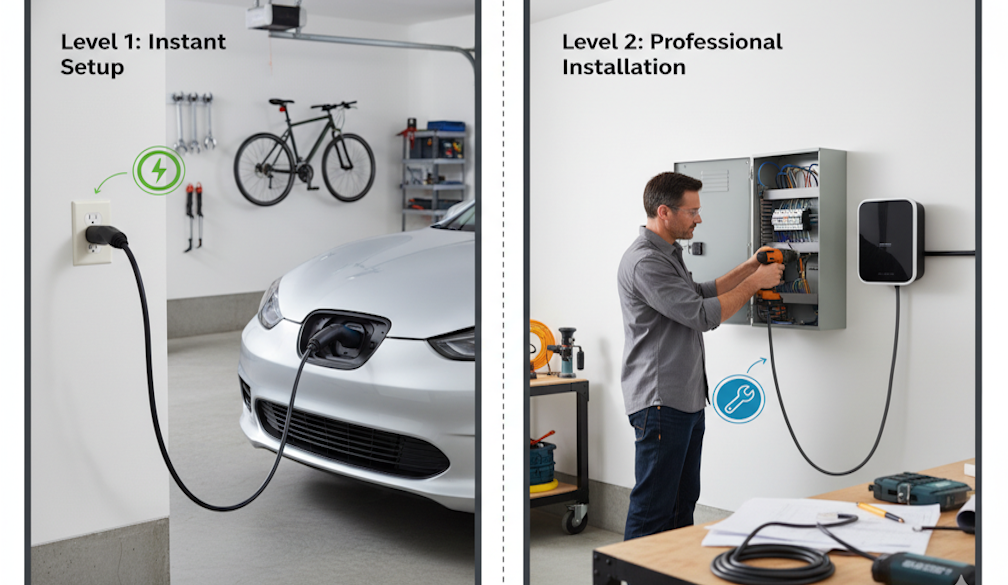
For example, installing a simple power outlet to charge a plug in hybrid may only require a few hours of work. On the other hand, upgrading to three phase Level 2 charging often involves enhancing the switchboard and electrical supply before installation can begin. This type of upgrade can extend the project to several days. Apartment buildings may also require additional coordination, which can add to the timeline.
Property type also influences installation time. Freestanding houses with private garages are typically quicker and more straightforward. Installations in apartment complexes or shared garages tend to take longer, particularly if common property is involved.
Is Body Corporate Approval Required?
If you live in a townhouse or apartment complex with shared facilities, you will usually need body corporate approval before installing an EV charger. This approval process can take several weeks.
The typical steps include:
Reviewing Your By Laws
Check whether your body corporate has existing rules relating to EV charger installations. Your building manager or committee can provide the relevant documentation.
Obtaining an Electrical Quote
Before submitting an application, consult an electrician to determine the scope of work. This may include new cabling, switchboard upgrades or access to shared power infrastructure.
Submitting a Formal Application
Applications are generally made in writing and reviewed by the body corporate committee. In some cases, approval may require discussion at a general meeting of residents.
Receiving a Decision
The committee will vote on the proposal. If the application is declined, or approved with conditions you believe are unreasonable, you can seek assistance through the BCCM office to resolve the matter.
Conclusion
If you are considering purchasing an electric vehicle, installing a home charger is one of the most convenient and cost effective ways to manage charging. It provides reliability, flexibility and long term savings.
Always seek the expertise of a professional with experience in Brisbane EV charger installation services for houses, townhouses and apartment complexes. Certified technicians are able to install a wide range of systems, including Tesla chargers, and can recommend a solution that matches your vehicle, property and budget.