
How to Pick the Best Colour Hybrid Flooring for Your Space
Selecting the right hybrid flooring colour does more than enhance the appearance of individual rooms. It contributes to your home’s overall visual harmony and can support long-term property value, making your flooring choice both a design decision and a smart investment.
Whether you are constructing a new home or refreshing an existing space, choosing suitable hybrid flooring colours for each room helps create a welcoming atmosphere and turns your home into a modern, comfortable retreat.
If you are new to hybrid flooring, expert guidance can make the process much easier.
Key Takeaways
- Flooring colour plays a major role in shaping the look and mood of a space, influencing how large, bright, or intimate a room feels.
- Lighter shades tend to open up smaller rooms and reflect light, while deeper tones create warmth and visual depth in larger areas.
- Natural and artificial lighting can alter how colours appear, so it is important to consider how your chosen shade will look at different times of day.
- Colour selections should complement existing furnishings and interior style to create a cohesive look.
- Quality Gold Coast hybrid flooring often includes UV resistant coatings to help colours retain their appearance, but thoughtful colour choice can also reduce the visual impact of fading in sun exposed areas.
This guide explores key colour considerations for hybrid flooring to help homeowners shape their interiors with confidence and achieve lasting satisfaction.
Choosing Distinct Hybrid Flooring Colours for Each Space
The right flooring colour can elevate both the style and functionality of your home. Tones such as light oak, warm honey, soft greys, and deeper walnut shades all influence the mood of a room in different ways. Thoughtful colour selection across kitchens, living areas, bathrooms, and home offices can significantly enhance the overall aesthetic when planned with care.
Kitchen Hybrid Flooring
Selecting a suitable colour for kitchen flooring requires balancing appearance with practicality. Kitchens experience frequent foot traffic and regular exposure to spills and debris.
Mid range tones such as natural oak, soft greys, and warm beige are practical choices as they disguise everyday dirt and wear while pairing well with a wide variety of cabinetry colours. These tones work particularly well alongside white, sage, or navy cabinetry. Lighter flooring can complement darker cabinetry and help smaller kitchens feel more open, while darker flooring can add contrast and sophistication to kitchens with light coloured cabinets.
In open plan homes, limiting the number of timber tones used across adjoining spaces helps maintain a cohesive look and avoids visual clutter.
Living Room Hybrid Flooring
Living room flooring colours should be chosen with consideration for room size, light levels, and existing furniture. Pale timber tones, light greys, and cool neutral shades can make compact living areas feel more spacious and airy. Deeper colours such as dark walnut, charcoal, or rich warm browns create a more intimate, cosy atmosphere in larger rooms.
Where natural light is limited, lighter tones help brighten the space. Contrasting premium quality Brisbane hybrid flooring with furniture colours can also create visual interest, such as pairing light floors with darker furnishings or darker floors with lighter walls and decor.
Bathroom Hybrid Flooring
In bathrooms, colour selection should enhance brightness while maintaining a clean, refined feel. Light oak, pale timber, and soft grey tones help reflect light and make smaller bathrooms appear larger, creating a fresh, spa like ambience.
Very dark shades can make compact bathrooms feel confined and may highlight water marks and dust more easily. Mid range timber tones and soft greys provide a practical balance, helping disguise everyday marks while maintaining a neutral, modern look. Warm natural tones can add comfort and a subtle organic feel to bathroom spaces, while light to mid greys suit contemporary fixtures and finishes.
Office Hybrid Flooring
When selecting flooring for home offices or workspaces, comfort, focus, and professionalism are key considerations.
Soft neutral shades such as light to mid greys, warm beiges, and natural oak tones reduce visual distraction and support concentration. Warmer mid tones can create a welcoming feel in reception or shared work areas without detracting from a professional appearance. Cooler grey tones pair well with blues and muted accent colours, helping create a clean, contemporary work environment.
If unsure about colour selection for workspaces, professional flooring advice can help ensure the final result suits both practical needs and aesthetic goals.
Light Versus Dark Hybrid Flooring
Choosing between light and dark flooring is not purely a design choice. It also affects how a space feels and functions.
Darker tones such as charcoal, deep walnut, and rich brown can ground large open plan areas and add contrast in modern interiors. While darker floors may disguise certain stains, they tend to show dust and pet hair more readily.
Lighter tones can visually expand smaller rooms and work well in minimalist designs. They hide dust more easily but can make spills, footprints, and marks more noticeable. Testing flooring samples in both daytime and evening lighting is recommended, as artificial lighting can influence whether colours appear warmer or cooler.
Practical Considerations When Selecting Hybrid Flooring Colours
Trends alone should not dictate your colour choice. The most suitable herringbone flooring shade depends on your home’s proportions, lighting conditions, and lifestyle requirements.
Room Size and Layout
Light shades such as pale oak or ash can make narrow hallways and compact rooms feel more open and brighter. Laying boards diagonally in long or narrow spaces can further enhance the sense of width. Darker tones such as walnut or charcoal bring warmth and balance to large, open plan layouts.
Lighting Conditions
Warm natural light enhances honey and oak tones, while cooler light suits neutral greys and stone inspired shades. Warm LED lighting tends to complement golden or brown toned floors, whereas cool white lighting highlights greys and contemporary finishes. Testing samples in your home at different times of day helps ensure the chosen colour remains appealing under varied lighting conditions.
Lifestyle and Foot Traffic
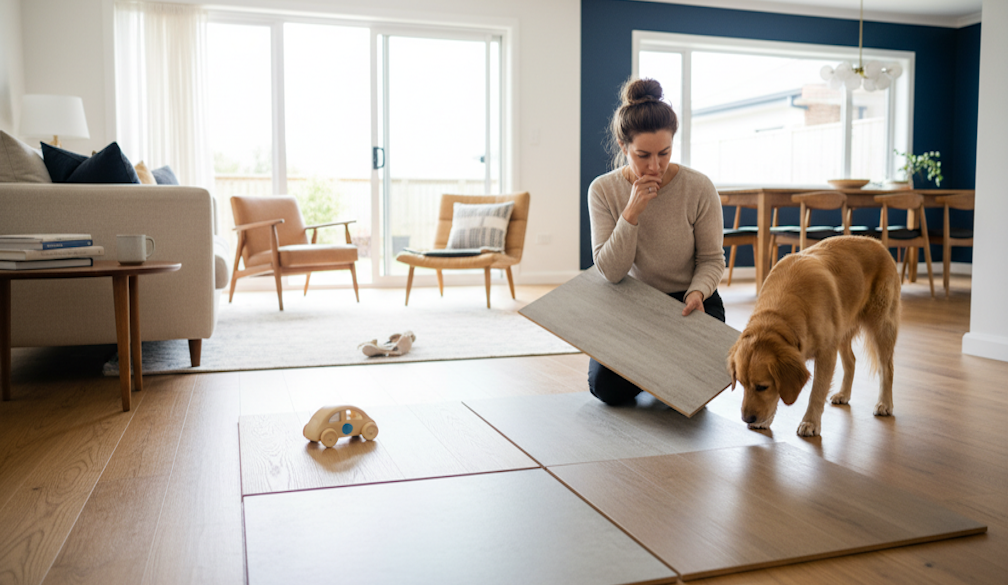
Homes with children or pets benefit from mid toned colours such as warm grey or light walnut, which are more forgiving of everyday wear, crumbs, and minor marks. Dark floors tend to reveal dust and pet hair, while very light floors can show scuffs and spills more easily. Textured or lightly embossed finishes can help mask small marks and improve slip resistance in busy areas such as kitchens and hallways.
Conclusion
Choosing the right high-end Sydney hybrid flooring colour involves more than matching current trends. It requires careful consideration of design, practicality, and lifestyle needs. Whether you are selecting flooring for a kitchen, living room, bathroom, or office, the right colour can elevate your space, improve everyday comfort, and support long-term value.