

Building Design vs Building Certification: What's the Difference?
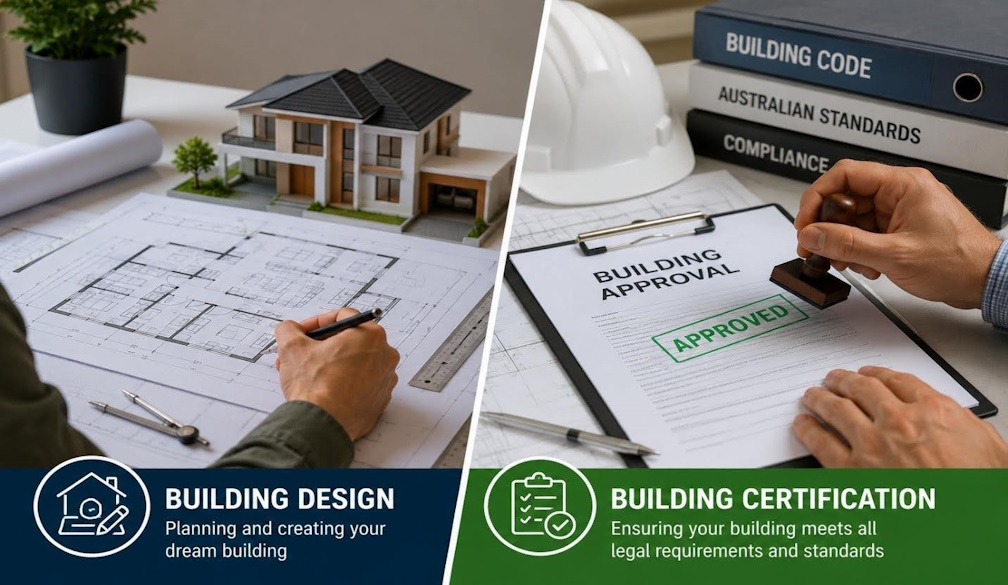
Planning a new home, home extension, granny flat, renovation, or commercial project involves much more than choosing finishes and hiring a builder. Before construction begins, several professionals work together to help turn your ideas into a compliant, functional, and well-planned building project.
Two roles that are often confused are the building designer and the building certifier. While they regularly work on the same projects, they have very different responsibilities. Understanding the difference can help homeowners make informed decisions, communicate more effectively throughout the project, and reduce the likelihood of unnecessary delays during approvals and construction.
Understanding the Different Roles in a Building Project
What Does a Building Designer Do?
A building designer is responsible for transforming your ideas into practical building plans that suit both your lifestyle and your property.
Whether you're building a new home, adding a granny flat, extending your existing house, or planning a major renovation, the design stage considers much more than appearance. A professional designer carefully plans room layouts, natural light, ventilation, site orientation, access, functionality, and construction practicality while also considering the relevant planning requirements for your project.
If you're planning a project in the region, working with an experienced draftsman Central Coast can help ensure your ideas are translated into detailed plans that builders, engineers, and approval authorities can work from. Well-prepared drawings reduce uncertainty during construction and provide a solid foundation for every stage of the build. Businesses such as Naka Building Design specialise in preparing professional building plans for a wide range of residential and commercial projects.
What Does a Building Certifier Do?
While the building designer prepares the plans, a building certifier performs a completely different role.
A building certifier assesses proposed building work against the applicable building requirements and approval pathways. Depending on the project, this may involve reviewing plans and documentation, issuing approvals where appropriate, conducting mandatory inspections during construction, and confirming that completed work satisfies the relevant building requirements.
Rather than designing the building, the certifier focuses on helping ensure the project complies with the necessary standards throughout the approval and construction process.
Why Both Professionals Are Important
Many homeowners assume that one professional manages every aspect of a building project, but successful construction relies on several specialists working together.
The building designer develops the plans, engineers provide structural advice where required, builders complete the construction, specialist trades carry out their individual work, and the building certifier oversees the approval and inspection process from a compliance perspective.
Each professional contributes different expertise, helping minimise misunderstandings while improving communication between everyone involved.
Common Projects That Benefit From Both Services
Many residential and commercial projects involve both building design and building certification.
Some common examples include:
- New homes
- Home extensions
- Granny flats
- Major home renovations
- Garage conversions
- Swimming pools
- Outdoor entertaining areas
- Commercial fit-outs
- Industrial developments
Even projects that appear relatively straightforward can benefit from involving the appropriate professionals early, helping reduce delays and allowing any potential issues to be addressed before construction begins.
What Happens If Plans Need to Be Changed?
It's not unusual for building plans to require amendments during the approval process.
Additional information may be requested, certain design details may need clarification, or minor changes may be recommended to satisfy the relevant building requirements. Identifying these matters before construction starts is generally much simpler than making changes once the build is already underway.
An experienced building certifier in Sydney such as CertOne can assess proposed works, identify potential compliance concerns, and explain the available approval pathways where further assessment or amendments may be required. Their team provides building certification, BCA compliance advice, inspections, and approval support for residential and commercial projects, helping homeowners identify potential issues early and keep projects progressing as smoothly as possible.
Why Good Communication Matters
One of the biggest contributors to a successful building project is clear communication between everyone involved.
When designers, certifiers, engineers, builders, and homeowners work collaboratively, potential issues can often be identified before they become expensive construction problems. Open communication also helps ensure everyone understands the project scope, timelines, documentation requirements, and individual responsibilities from the beginning.
This coordinated approach often leads to fewer delays, fewer unexpected variations, and a much smoother building experience overall.
Plan Thoroughly Before Construction Begins
Many construction delays occur long before the first tradesperson arrives on site.
Taking the time to finalise your design, gather the required documentation, understand the approval process, and consult the appropriate professionals creates a much stronger foundation for the project. Careful planning also gives homeowners greater confidence when construction begins, knowing that important decisions have already been considered.
A little extra preparation at the beginning often saves significant time, money, and frustration later in the project.
Understanding the Difference Helps You Build With Confidence
Building design and building certification are both essential parts of a successful construction project, but they serve very different purposes. A building designer focuses on creating practical, functional plans that bring your vision to life, while a building certifier helps assess compliance, manage approvals, and carry out inspections throughout the building process.
Understanding how these professionals work together allows homeowners to approach their projects with greater confidence while reducing the likelihood of unnecessary delays or costly surprises. By engaging experienced professionals from the planning stage through to completion, you'll be giving your project the best opportunity for a smooth and successful outcome.