
What Is BAL-Rated Cladding, and Do You Need It for Your Build?
If you have started researching cladding for a new build or renovation, there is a good chance you have come across the term BAL rating somewhere along the way, often attached to a cladding product without much explanation of what it actually means.
For many homeowners, this becomes one of the more confusing parts of choosing cladding, particularly if you are not entirely sure whether it applies to your property at all. Here is what it actually means, and how to work out whether it matters for your build.
What a BAL Rating Actually Measures
BAL stands for Bushfire Attack Level, and it is a rating system used across Australia to measure how exposed a particular property is to bushfire, based on factors like nearby vegetation, slope, and distance from bushland. Properties are assessed under Australian Standard AS 3959 and given a rating ranging from BAL-LOW through to BAL-FZ, the highest category, which applies to homes facing direct flame contact in extreme conditions.
Each rating level corresponds to a specific amount of radiant heat exposure, measured in kilowatts per square metre, that a building might experience during a bushfire. The higher your rating, the more intense that exposure is expected to be, and the more robust your building materials need to be to withstand it.
Why This Matters More Than People Expect
Bushfire risk in Australia is not a niche concern limited to a handful of remote properties. Research has found that bushfires account for around 40 per cent of natural hazard deaths in Australia, according to research published in PMC, reflecting both the scale of bushfire risk across the country and the growing number of homes being built in areas where that risk is genuinely present.
Suburban growth pushing further into bushland-adjacent areas has only increased the number of properties affected by these requirements, which means BAL ratings are relevant to a far wider range of homeowners than many people initially assume.
How to Find Out If Your Property Is Affected
The first step is establishing whether your block sits within a designated bushfire-prone area at all. In most states, this is determined by official maps prepared by local councils or fire authorities, and your council can usually tell you directly whether your address falls within one of these zones. If it does, a qualified BAL assessor will need to visit your site and provide a formal rating, taking into account the surrounding vegetation, the slope of your land, and your property's specific orientation.
It is worth getting this assessment done early, ideally before you finalise your cladding choices, since the rating directly determines which materials you are permitted to use and which ones will not meet the required standard.
What Changes Once You Have a BAL Rating
Once your BAL rating is confirmed, it shapes a surprising number of building decisions beyond just cladding, including window glazing, roofing, decking, and even gaps around doors and vents. For cladding specifically, the rating determines whether standard materials are acceptable or whether you need to move to non-combustible options or specially treated bushfire-resisting timber.
At lower ratings, such as BAL-12.5, the focus is mainly on preventing ember entry rather than withstanding intense heat, which means standard cladding materials are often still acceptable provided gaps and joints are properly sealed.
From BAL-19 upwards, the requirements become considerably stricter, and external walls generally need to be constructed from non-combustible material or bushfire-resisting timber that has been tested and certified to the relevant standard.
Choosing the Right Cladding for Your Rating
If your assessment comes back at a higher BAL rating, this does not mean your design options disappear, but it does mean your cladding choice needs to be selected with that rating specifically in mind.
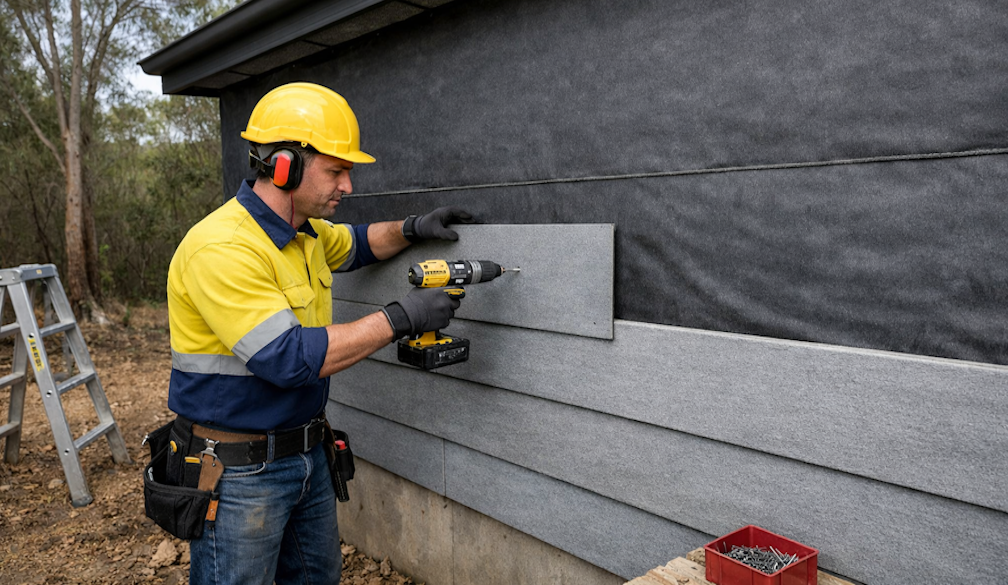
Many fibre cement and metal cladding products are manufactured to meet bushfire compliance requirements up to BAL-40 or BAL-FZ, giving you a workable range of styles and finishes even at the highest risk levels.
For properties at lower BAL ratings, there is generally more flexibility, and a wider range of standard cladding products will already meet the requirement without any additional certification needed. Either way, it is worth asking your supplier directly which BAL rating each product is certified to, rather than assuming a material will be compliant simply because it looks similar to others that are.
Why This Affects Your Budget Too
It is worth being upfront about the fact that BAL-compliant cladding can come at a higher cost than standard materials, particularly at the higher rating levels where non-combustible products are required. This additional cost is genuinely necessary where it applies, but it does mean factoring it into your budget early rather than discovering it partway through the design process.
The good news is that compliant options exist across a wide price range. Affordable Brisbane cladding and cost-effective Gold Coast cladding suppliers stock BAL-rated products suited to a range of budgets, and the same applies further south, where budget Sydney cladding suppliers can usually point you toward compliant options that do not blow out your overall project cost.
Speaking with an established Australian building materials supplier early in your planning means you get accurate guidance on what is genuinely required for your specific rating, rather than overpaying for compliance you may not need, or underestimating what your build actually calls for.
Getting This Right From the Start
A BAL rating is not something to treat as an afterthought once your cladding has already been chosen. Confirming whether your property is affected, getting a proper assessment if it is, and choosing cladding that genuinely meets your required rating protects both the safety of your home and your ability to get council approval without delays.
If you are unsure whether your build falls within a bushfire-prone area, it is worth checking with your local council before you go too far down the path of selecting finishes. Getting this detail sorted early saves you from having to backtrack on design decisions later, and it gives you confidence that your home is genuinely built to handle the conditions around it.