
CPR Hesitation Is Killing Women — And Yes, Blokes, We’re Part of the Problem
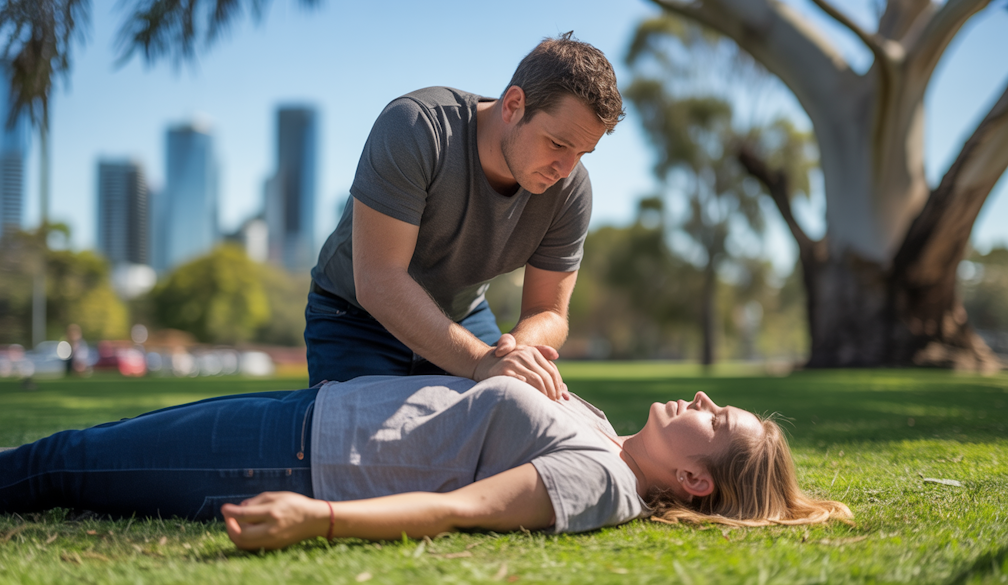
Let’s be honest: if a woman collapsed in front of you right now, would you know what to do? More importantly — would you do it?
Because here’s the uncomfortable truth: women are significantly less likely than men to receive CPR from bystanders. And it’s not because they don’t need it. It’s because too many of us hesitate. And that hesitation? It’s deadly.
The Stats Don’t Lie
According to research led by Dr Jessica Stokes Parish at Bond University, women are 14% less likely to receive CPR than men after suffering cardiac arrest. That’s not just a number — that’s lives lost. And the reasons behind it are disturbingly familiar:
- Fear of being accused of inappropriate touching
- Cultural discomfort or personal awkwardness
- A lack of training with female-presenting CPR manikins
- Misunderstanding of how cardiac arrest presents in women
In fact, 95% of CPR manikins used in training are flat-chested or male-presenting, meaning most people never learn how to perform compressions on a realistic female torso. So when the moment comes, they freeze.
Why It Matters
Cardiac arrest is a race against time. Every minute without CPR reduces survival chances by up to 10%. And yet, women are still less likely to receive it — even in public, even when surrounded by people who know what to do.
It’s not just about anatomy. It’s about mindset. It’s about whether we, as men, are willing to push past discomfort and do what’s right — even when it feels awkward.
Real‑Life Story: A “Surreal” Pilates Studio Rescue
To make this even more real: in Mildura, Victoria, a 65‑year-old woman named Fortunata “Forch” Panetta collapsed during a reformer Pilates class. (ambulance.vic.gov.au)
At first, the class thought she’d simply fainted, but it quickly became clear this was something far more serious. Two women in the class immediately began CPR. One person called Triple‑Zero (000), even though she’d never done that before.
Lisa Nystrom, an off‑duty nurse in the class, said she had to rely on her instincts — without monitors or her usual hospital team around. They worked together, gave high-quality compressions, and when paramedics arrived, they used a defibrillator.
Thanks to their actions, Forch’s pulse returned within about ten minutes. She spent nearly three weeks in hospital, but she did recover and went home. One of the paramedics later said that because bystanders stepped in so quickly and confidently, Forch had a real chance of survival — and that knowing CPR made all the difference.
The Gender Bias You Didn’t Know You Had
Here’s something else you might not know: women often present atypical symptoms during cardiac arrest. That means their distress might not look like the textbook version — clutching chest, collapsing dramatically. It could be nausea, fatigue, or shortness of breath. And because of that, bystanders often delay calling for help or dismiss it as “not serious.”
Combine that with the hesitation to touch a woman’s chest, and you’ve got a deadly cocktail of inaction.
So What Can We Do, Blokes?
This isn’t about guilt. It’s about responsibility. It’s about stepping up when it counts. Here’s how:
- Get trained properly. Learning CPR makes a huge difference in confidence! Brisbane-based My First Aid Course trains hundreds of Aussies every year and their lead instructor puts it bluntly: “We tell every student — hesitation is a killer. The first few minutes are everything. If someone’s unconscious and not breathing, you don’t ask questions. You act. CPR is not optional, and it’s not gendered. It’s survival.”
- Act fast. Don’t wait. Call 000, start compressions, use an AED if available.
- Don’t hesitate. You’re not groping. You’re saving a life.
- Speak up. Normalise CPR on all bodies. Talk about it with your mates.
Bottom Line
If you’re the kind of bloke who’d jump in to help a mate — great. But if you’d hesitate because the person in need is a woman, it’s time to rethink your instincts. CPR doesn’t care about gender. Neither should you.
Let’s do better. Let’s get trained. Let’s stop letting stigma decide who lives and who dies.